


I want to talk about something that keeps coming up in my DMs but almost never makes it into the industry headlines.
Studios can’t find enough instructors.
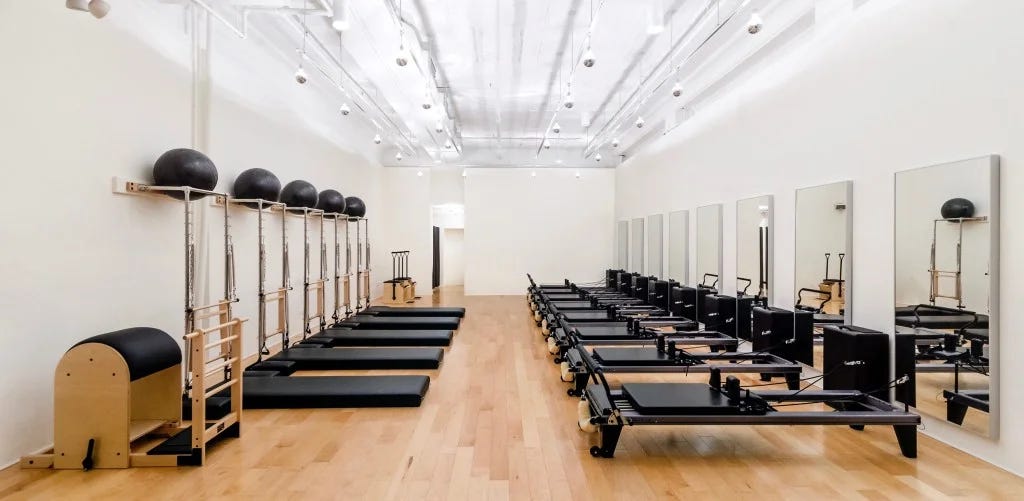
Like, actually can’t. Not “we’re being picky” can’t. Not “we posted and got 50 applicants” can’t. The kind of can’t where studio owners are teaching six classes a day because there’s literally no one else to cover the schedule. The kind where new locations delay their opening because they don’t have enough trained bodies to staff the reformers.
And the numbers back it up. Nearly half of studio owners, 46%, now say instructor shortages are their single biggest operational challenge. Not rent. Not marketing. Not equipment costs. Staffing.
Right behind that? Work-life balance concerns, at 45%. Which, if you think about it, is the same problem wearing a different hat.
How did we get here?
The math is actually pretty simple.
Demand for Pilates exploded. The US market hit $19.2 billion. Studios offering Pilates grew from 17% to 45% in four years. Every franchise I wrote about last week (JETSET, Bodybar, Pilates Addiction) is planning to open hundreds of new locations this year.
But the instructor pipeline didn’t keep up. Becoming a certified Pilates instructor still requires hundreds of hours of coursework and practice. It’s expensive. It takes months, sometimes over a year for a comprehensive certification. And the financial return on that investment? Honestly... mixed.
Entry-level instructors are starting around $24–25 an hour. In most major cities, that’s not enough to live on if Pilates is your only income. Average pay has climbed to around $39–40 an hour for more experienced instructors, and top-end folks in NYC or LA can push $65+. But the gap between “I just got certified” and “I can actually pay my rent doing this” is real, and it’s where a lot of people drop out.
So you’ve got a situation where studios are multiplying, the training pipeline is slow and expensive, and a chunk of new instructors leave within the first two years because the money doesn’t work.
That’s a staffing crisis. Even if nobody’s calling it that.
The burnout piece is real
I hear from instructors constantly who love the work but are drowning in it. And I get it. I’ve been there.
When you’re teaching 25+ classes a week because there’s no one to share the load, your body breaks down. Your cueing gets stale. You stop being present with clients because you’re just trying to survive the schedule. And then the guilt kicks in. Because you’re supposed to love this, right? You chose this over corporate. You can’t complain about the thing you picked.
Except you can. And you should.
Burnout in Pilates instruction is a real thing. Instructors tell me they feel underprepared, which makes them overwork to prove themselves, which exhausts them, which makes them feel even less confident. It’s a loop. And nobody talks about it because we’re all supposed to be grateful we get to do this for a living.
And studios that don’t acknowledge this, that just keep adding classes to an instructor’s schedule without asking how they’re doing, are going to lose people. Faster than they can replace them.
What this means if you’re an instructor right now
Okay, here’s the part where the news is actually good for you.
You have leverage. Maybe more than you’ve ever had.
If studios genuinely can’t find qualified instructors (and they can’t) then every good instructor becomes more valuable. That means:
You can negotiate harder on pay. Don’t start with “I’d love to teach here.” Start with “here’s my rate.”
You can be pickier about where you work. Red flags at a studio? Walk. There’s another one hiring down the street.
Specialized skills are worth real money right now. Prenatal, injury rehab, reformer-specific training. Anything beyond general mat certification commands a premium. Studios will pay more because they have to.
Average pay for a certified Pilates instructor is sitting around $70K annually in 2026, but that number has a massive range. The instructors at the top aren’t just better at cueing. They’re better at positioning themselves as specialists and negotiating accordingly.
What this means if you own a studio
Here’s what actually matters right now: keeping your instructors. Not your clients. Your instructors.
Because every time an instructor leaves, you lose:
The clients who followed them
The institutional knowledge of how your studio runs
Months of training and onboarding time
Schedule stability
Some things I’ve seen smart studio owners do:
Pay more. I know, I know. Margins are tight. But I wrote a whole piece earlier this year about why studios struggle to raise instructor pay and what actually fixes it. The short version: if you’re losing instructors to better-paying studios, the cost of turnover is higher than the cost of a raise.
Offer development, not just hours. Instructors who feel like they’re growing stay longer. Pay for their continuing education. Give them mentorship. Let them develop a specialty within your studio.
Be honest about workload. If someone is teaching 20+ classes a week and you’re not checking in on how they’re doing... that’s on you. Not them.
The bigger picture
Here’s what I keep coming back to.
The Pilates industry is in this weird place where the demand story is incredible (growth everywhere, mainstream adoption, franchise expansion, cultural relevance) but the supply story is fragile. The whole thing runs on instructors. Without them, the reformers are just expensive furniture.
And right now, we’re not training enough of them, we’re not paying them well enough early on, and we’re burning out the ones we have.
Something’s gotta break. I think pay goes up. Studios won’t have a choice as the competition for talent gets sharper. I think certification paths get faster and more modular (some programs are already moving that way). And I think tech eventually helps one instructor do more. AI-assisted coaching, connected reformers, that kind of thing.
But right now? We’re in the messy middle. And if you’re an instructor reading this, the market is on your side. Don’t forget that.
Are you experiencing this, either as an instructor or a studio owner? I want to hear what it looks like in your market. Leave it in the comments.
Follow along for more:
TikTok: @coworkcourt
Instagram: @coworkcourt
xx,
Courtney